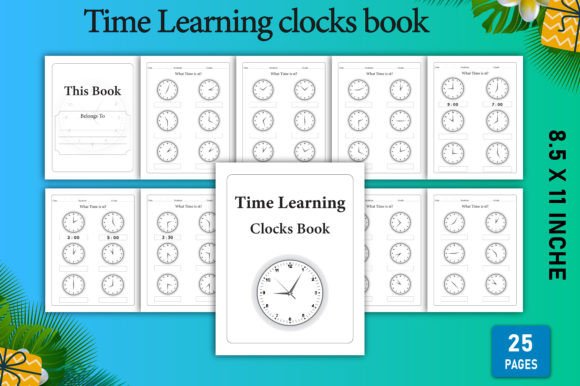
Enhancing Designs with a Time Learning Clock Book
Imagine a visual resource that not only serves a clear educational function but also exemplifies the principles of clean, effective design for a young audience. The Time Learning Clock Book for Kids represents more than just a learning tool; it’s a case study in creating accessible, engaging visual communication. From a graphic design perspective, such a product underscores how thoughtful design decisions can transform a simple concept into a compelling and user-friendly experience.
At its core, this type of project requires a deep understanding of visual hierarchy, color psychology, and typography. The goal is to guide a child’s eye effortlessly from the clock face to the numbers and instructions, making the learning process intuitive. This translates directly to broader design disciplines: whether you’re crafting a brand identity, a website interface, or marketing collateral, the same principles of clarity and guided engagement apply.
The Role of Design in Educational Resources
Creating a time learning clock book is a specialized exercise in editorial and print design. Every element must work in harmony to support the primary objective—teaching. This involves a meticulous approach to layout, ensuring that each page maintains a consistent visual rhythm that aids comprehension. For designers, dissecting such a project offers valuable lessons in structuring information for maximum impact.
Key Design Considerations
When evaluating or creating similar assets, several factors are paramount for professional results:
- Color Palette: Using CMYK colors optimized for print ensures vibrancy and accuracy, while the choice of hues must be engaging yet not overwhelming for a child’s developing focus.
- Typography: Fonts must be highly legible, friendly, and scalable. They establish the tone of the material and are crucial for readability.
- Composition & Visual Hierarchy: The arrangement of clock illustrations, text, and activity elements must create a natural flow, directing attention logically across the page.
- Consistency & Scalability: A cohesive design system across all 25 pages builds trust and ease of use. The artwork and layouts must also be versatile enough for potential adaptation into digital formats or related merchandise.
These considerations are not confined to children’s books. They are foundational to any project aiming for a polished, professional presentation, from corporate reports to packaging design.
Practical Applications Beyond the Book
The visual assets developed for a time learning clock book can serve as a springboard for numerous creative projects. The illustrations, iconography, and layout templates possess inherent versatility. Here are several applications where such a refined design sensibility proves invaluable:
- Branding for Educational Platforms: The cheerful, clear visual style can inform logo design, color schemes, and overall brand identity for apps, websites, or learning centers.
- Marketing & Social Media Graphics: Components can be repurposed to create engaging posts, ads, or email campaigns that visually communicate concepts of time and learning.
- User Interface (UI) Design: The intuitive layout principles are directly applicable to designing child-friendly app interfaces or educational software, enhancing user experience (UX).
- Packaging & Merchandise: A strong visual design can extend to product packaging, stickers, or related physical goods, creating a cohesive product line.
- Digital Products & Templates: The underlying structure offers a template for creating other educational printables or digital activity sheets, streamlining the design workflow for creators.
In each case, the emphasis on high-quality, print-ready files—with tested dimensions, resolution, and color space—ensures that the core design integrity is maintained across all mediums. This reliability is critical for professionals who need assets that perform flawlessly in both physical and digital realms.
Integrating Design Assets into Your Creative Process
Selecting or creating resources like a time learning clock book requires an eye for both aesthetic appeal and functional rigor. It’s about finding assets that align with your project’s goals and audience expectations. For a designer or business owner, such a resource is not merely a product; it’s a toolkit that can elevate your entire visual output.
Focus on assets that demonstrate a modern aesthetic, scalability, and compatibility with your existing systems. Whether you’re building a new brand identity, refreshing your social media graphics, or developing a series of digital products, the foundation of solid, tested design work saves time and ensures a professional result. The lesson from this specific example is universal: investing in well-crafted visual design fundamentally improves communication, strengthens engagement, and delivers a superior end-user experience.
Ultimately, every design choice, from the color of a number on a clock face to the spacing of text on a page, contributes to a larger narrative of quality and care. In a world saturated with visual content, the distinction often lies in these details—the thoughtful application of typography, the intentional color palette, and the seamless visual hierarchy that turns a simple concept into an effective and beautiful piece of communication.