Simplify Your Day with a Minimalist Daily Agenda
Imagine starting your day with a clean, focused layout that immediately brings order to your thoughts and tasks.
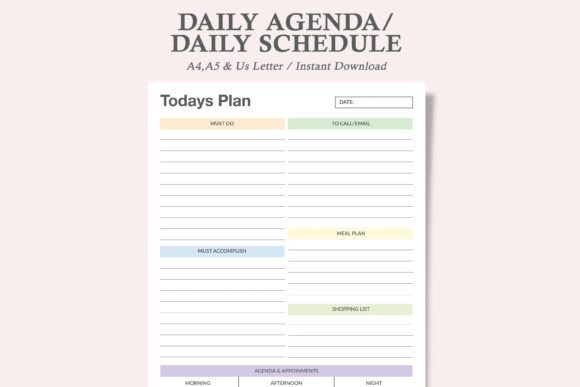
A well-designed daily agenda or daily schedule is not just a functional tool; it's a fundamental piece of visual design that supports productivity and clarity. From a professional graphic design perspective, these templates are more than printable pages—they are crafted creative assets that enhance your workflow through deliberate visual hierarchy and modern aesthetics.
The Design Philosophy Behind Effective Daily Planners
The core of a great daily organizer lies in its visual design. A professional, minimalist, and ink-friendly template prioritizes usability without sacrificing style. This approach ensures the design serves its primary function: to organize information clearly and efficiently. Every element, from the typography choices to the spatial composition, is considered to reduce cognitive load and create a seamless user experience.
Such templates embody key principles of graphic design, like establishing a clear visual hierarchy. Important appointments or deadlines are naturally emphasized through layout, not clutter. This thoughtful structure turns a simple daily log into an effective communication tool, helping you process your schedule visually.
Integrating Design Assets into Your Creative Ecosystem
For designers, marketers, and business owners, these daily pages are versatile design assets. Their clean, scalable format makes them compatible with various projects beyond personal planning.
- Branding & Professional Presentation: Customizing a digital editable PDF with your brand’s color palette and typography can extend your brand identity into everyday operational tools, reinforcing consistency.
- Marketing & Client Materials: They can be adapted as part of welcome packets, project timelines, or editorial design within service proposals, adding a touch of organized, professional presentation.
- Digital Products & Content Creation: The provided JPEG and PDF files in multiple sizes (US Letter, A4, A5) offer flexibility. They can serve as backgrounds for social media graphics, integrated into web design layouts for productivity apps, or used as print design bases for physical merchandise.
Practical Applications in Your Design Workflow
Adopting a high-quality daily tracker influences your entire creative process. It encourages a mindset where form follows function, a tenet central to UX design and effective communication. Whether you’re managing a complex advertising campaign, outlining a packaging design project timeline, or structuring your own creative projects, having a reliable visual framework streamlines execution.
Consider how the editable nature of these assets empowers you. You can adapt them digitally to match specific project needs, ensuring every daily schedule you print or share maintains a cohesive look that aligns with your overall design goals. This consistency is crucial for building trust and delivering clear messages, both internally and to your audience.
Ultimately, the choice to use a thoughtfully designed daily planner is a design decision in itself. It’s an investment in a tool that improves not only personal organization but also the quality of your visual output across branding, digital marketing, and client communications. By prioritizing clarity, scalability, and a minimalist aesthetic, you select a resource that supports both your immediate tasks and your long-term creative vision, proving that even the simplest design assets can have a profound impact on efficiency and professional presentation.