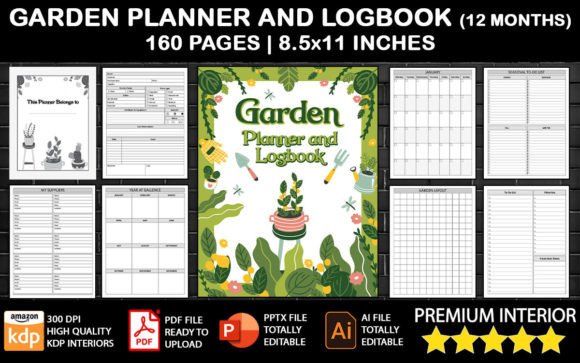
The Ultimate Guide to Streamlining Your Garden with a 12-Month Planner and Logbook
Gardening is a journey of patience, observation, and constant learning. Whether you cultivate a vast vegetable plot, a collection of fragrant herbs, or a balcony of blooming flowers, success hinges not just on planting but on planning. The chaos of forgotten sowing dates, misplaced supplier information, and vague memories of what worked last season can undermine even the most passionate gardener’s efforts. This is where a dedicated tool like a Garden Planner and Logbook transforms a hopeful hobby into a masterful, organized craft.
Beyond Simple Notes: The Core Philosophy of Garden Record-Keeping
Many gardeners start with a notebook or scattered digital notes. While these capture moments, they often fail to provide structure for proactive decision-making. A specialized 12-month garden planner and logbook is designed around the cyclical nature of gardening itself. It moves from annual overviews to monthly tasks, creating a framework that anticipates needs rather than merely reacting to problems.
The primary advantage of such a system is its holistic approach. It integrates the logistical, financial, and horticultural aspects of gardening into one cohesive record. Tracking supplier details ensures you remember where to find that special heirloom seed variety. Detailed plant care sheets allow you to note specific fertilizing schedules or pest issues for each crop. This consolidated knowledge becomes an invaluable personal reference manual, tailored precisely to your garden’s unique conditions and your own experiences.
Key Components of a Comprehensive Garden Logbook
A well-designed planner includes several essential sections that work together. The Yearly Overview provides a big-picture canvas for your ambitions—dreaming up new raised beds, perennial borders, or fruit tree additions. This is followed by Seasonal To-Do Lists, which break down those dreams into actionable steps aligned with nature’s calendar.
The Monthly Overview and Monthly To-Do List pages are the operational heart. Here, you record precise actions: sow lettuce indoors, transplant tomatoes after last frost, prune roses. Including a Monthly Shopping List section turns planning into practical preparedness, ensuring you have the right soil amendments, seeds, or tools on hand when needed.
Perhaps the most personalized element is the Plant Care Sheets with Notes. These pages are where you move from generic advice to specific, observed truth. Recording that your particular variety of zucchini thrived with extra compost, or that a certain lettuce bolt-ed early in the heat, builds a database of success and failure that is directly applicable to your future garden plans.
Practical Applications Across Gardening Styles
The utility of a garden planner and logbook extends far beyond traditional vegetable plots. For raised bed gardeners, who often practice intensive, succession planting, tracking what was in each bed month-by-month is crucial for soil management and crop rotation. The Garden Layout Planner Sheets allow for visual mapping of these dense plantings.
Flower and herb enthusiasts benefit immensely from noting bloom times, fragrance peaks, and harvest periods for drying or fresh use. A logbook helps pinpoint the perfect window for collecting lavender or calendula. Fruit growers, dealing with trees and bushes that change over years, can record pruning dates, pollination observations, and yield variations annually, creating a long-term growth history.
Even container gardeners and those with small spaces find value. Recording which container mixes worked best, how often patio tomatoes needed watering, and which suppliers offered the most suitable dwarf varieties turns limited space into maximized efficiency.
Transforming Workflow from Reactive to Proactive
A common gardener’s lament is "I forgot to..." A structured planner directly addresses this. By dedicating pages to Important Dates and Sow/Transplant schedules, you establish a timeline. This forward-looking practice shifts your workflow from scrambling to meet the season’s demands to calmly executing a pre-defined strategy.
The act of filling a monthly to-do list also encourages prioritization. You can clearly see that preparing soil beds is more urgent than sharpening tools, or that ordering seeds must happen before a supplier’s stock dwindles. This reduces overwhelm and creates a satisfying, task-by-task progression through the gardening year.
The Tangible Benefits of Organized Gardening
The investment in systematic record-keeping yields multiple returns. First is increased yield and plant health. By consistently applying lessons from your notes—perhaps adjusting planting depth or companion planting based on past results—you create a more resilient and productive garden.
Second is cost and time efficiency. A shopping list derived from a plan prevents impulsive or duplicate purchases. Knowing exactly what to do each month eliminates wasted weekend hours figuring out tasks. Third is the enhanced joy and learning derived from the practice. Gardening becomes less about guesswork and more about engaged, informed experimentation. Your logbook becomes a story of your garden’s life, full of observations that deepen your connection to the space.
Finally, it serves as a legacy of knowledge. If you share your garden with family or community, the planner is a clear guide. If you ever need to pause or change gardens, your accumulated data ensures you don’t start from zero again.
Implementing Your Garden Planner and Logbook
Starting with a new system need not be daunting. Begin by populating the static information: Supplier info for your favorite seed companies, nurseries, and tool shops. Then, as a new gardening year approaches, use the Yearly Overview to set a few broad goals—"increase pollinator plants," "try three new potato varieties."
As each month arrives, spend a few moments with the relevant monthly section. Refer to last year’s notes if available, check local frost dates, and then fill in your to-do list. The most critical habit is to log observations regularly, not just at season’s end. Jot down notes after watering, after harvesting, after a storm. These real-time impressions are the richest data.
Remember, the planner is a tool for you; adapt its use. Some may meticulously fill every plant care sheet. Others might focus heavily on the layout diagrams and monthly shopping lists. Its flexibility is its strength, accommodating the highly technical gardener and the intuitive one alike.
From Chaos to Clarity: The Long-Term Impact
Over years, a maintained Garden Planner and Logbook evolves from a simple record into a powerful analytical tool. You can compare weather patterns, pest outbreaks, and harvest volumes across seasons. You can identify trends—perhaps that your soil needs more lime every two years, or that certain crops perform better in the front yard than the back.
This long-term clarity fosters confidence. It reduces the anxiety of "am I doing this right?" and replaces it with the assurance of "based on my records, this is the best approach for my garden." It turns gardening from a collection of annual tasks into a coherent, evolving project where each year builds smarter upon the last.
In essence, this organized approach honors the complexity and beauty of gardening. It provides a structure to capture the fleeting details—the first sprout, the disappointing failure, the bumper crop—that collectively define the gardener’s wisdom. By committing to a system of planning and logging, you ensure that your time invested in the soil yields not just plants, but profound and personal knowledge.