Your Ultimate Planning Companion: Navigating the 2023-2024 Planner KDP Canva Template
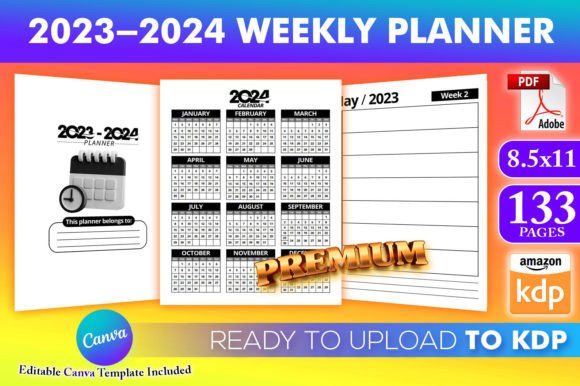
For anyone looking to organize their days, months, and years, a planner is a fundamental tool. Yet, creating one that is both functional and aesthetically pleasing can be a daunting task, especially for entrepreneurs and content creators exploring self-publishing platforms like Amazon KDP. Enter the 2023-2024 Planner KDP Canva Template. This product isn't just a static PDF; it's a flexible design foundation. You receive a 133-page interior PDF, perfectly formatted for the standard 8.5×11 trim size and tested for KDP upload, alongside a fully editable Canva template link. The package covers two full years (2023-2024), contact pages, holiday and birthday reminder sections, and provides high-resolution files. The real power lies in the editable template: you are free to make any design using Canva, add or remove elements, and apply your own twists without needing a premium account.
The Common Oversight: Treating the Template as a Finished Product
A significant misunderstanding occurs when users download the 2023-2024 Planner KDP Canva Template and immediately upload the provided PDF to KDP without any customization. While the file is technically "ready," this approach treats a powerful customizable tool as a generic commodity. The result is a planner that blends into the vast marketplace, failing to reflect your unique brand or cater to a specific audience's needs. For a blogger targeting productivity enthusiasts, the default design might lack motivational elements. For a small business owner, it might need integrated project tracking pages. Using the template as-is often leads to lower customer satisfaction because it doesn’t solve niche problems or stand out visually.
The better approach is to view the provided PDF as a proof of structure and the Canva link as your creative workshop. Before listing your product, ask yourself: "What specific problem does my target audience face, and how can this planner's layout address it?" Use the free Canva account to adapt the core structure. For example, you could replace a generic notes page with a dedicated "Weekly Content Calendar" for marketers or a "Student Assignment Tracker" for educators. This customization transforms a template into a tailored solution, increasing its value and appeal.
Neglecting the Pre-Publication Checklist
Even with a professionally tested template, skipping a final review is a critical mistake. The excitement of having an editable 2023-2024 Planner KDP Canva Template can lead to rushing the publication process. Users might modify the design in Canva but forget to verify that all 133 pages flow logically after their edits. Another overlooked detail is the trim size and bleed settings; although the template is built for 8.5×11, any accidental canvas resizing in Canva can misalign margins. Furthermore, not double-checking the year-specific elements—like the 2023-2024 calendar—for accuracy after you’ve moved elements around can result in a product with incorrect dates, a fundamental error that destroys usability.
To avoid this, implement a three-step pre-upload check. First, review the page sequence in your edited PDF: ensure contact information pages follow the calendar, and all sections are in a intuitive order. Second, confirm technical specifications: re-check the document dimensions within Canva and use the "View as PDF" preview function meticulously. Third, validate all dynamic content: manually scan every month, holiday list, and reminder page for correctness. This disciplined final audit prevents technical glitches and ensures the planner is not only beautiful but functionally flawless.
Underestimating the Power of Simple Customization
Many beginners assume design requires complex skills, leading them to underutilize the Canva template. They might change only the cover color and consider it "customized." This underestimation limits the product's potential. The template includes elements like icons, section headers, and layout grids that are easily modified in Canva with drag-and-drop simplicity. For instance, the "Birthdays Reminder" page could be enhanced by adding a small icon next to each entry field, improving visual clarity. A professional looking to sell this planner might overlook that changing the font to a more modern, readable typeface can dramatically elevate the entire interior's perceived quality.
Practical advice is to start with small, impactful twists. Use Canva’s vast free font library to select a cohesive font pair (one for headings, one for body text). Swap the default color palette to one that aligns with your niche—calming blues for wellness, vibrant accents for creatives. Add simple graphic elements from Canva’s free media library to break up text-heavy pages. These minimal efforts, requiring no premium account, significantly differentiate your planner without compromising the robust, tested underlying structure.
Failing to Align Design with Audience Expectations
Choosing or applying the 2023-2024 Planner KDP Canva Template without considering the end-user's experience is a frequent error. A freelancer might create a planner with a highly minimalist design, but if their target audience is busy parents who need clear, bold labels for quick reference, the product becomes less usable. Similarly, adding too many decorative elements can clutter the pages, making the practical planning space cramped and inefficient. The mistake here is designing for personal taste rather than for customer utility, which affects communication through the product and ultimately leads to poor reviews or low sales.
To correct this, research your audience before you customize. Look at popular planners in your intended category on KDP. Note what users praise in reviews: "lots of writing space," "clean monthly overviews," "included goal-setting pages." Then, use the editable Canva template to emphasize those praised features. If your audience is entrepreneurs, you might expand the contact information section to include "Client Meeting Notes" or "Network Follow-Up" columns. Aligning your modifications with explicit user needs ensures your final planner is helpful, not just handsome.
Overlooking the Two-Year Structure as a Key Selling Point
The template encompasses a two-year calendar (2023-2024), a feature that some users might downplay in their product description or presentation. This is a missed opportunity. Many planners offer only a single year, forcing customers to buy a new one annually. The two-year span provides extended value, helping users plan long-term projects, academic cycles, or business goals across a wider timeframe. Not highlighting this advantage in your listing or failing to design the calendar pages for clear cross-year visibility (like adding a small 2024 preview on 2023 pages) diminishes the template's inherent benefit.
A better approach is to feature the two-year functionality in both your design and marketing. In your Canva edits, ensure the transition from 2023 to 2024 is visually seamless. Perhaps add a "Yearly Overview" page that bridges both years. When describing your product, clearly communicate this extended utility. For example, you could write: "This planner offers a unique 24-month framework, ideal for planning your 2023 startup launch and tracking its growth into 2024." This turns a template feature into a compelling customer benefit.
Ultimately, the 2023-2024 Planner KDP Canva Template is a bridge between professional structure and creative freedom. By avoiding the common pitfalls of under-customization, technical neglect, and audience misalignment, you can leverage this tool to build a standout product. Remember to treat the editable link as your primary asset, perform meticulous pre-publication checks, and make every design decision with your end-user in mind. This thoughtful process ensures the final planner you offer is not only ready for KDP but ready to genuinely help people organize their important years.