Unlocking Creative Productivity: A Guide to KDP Interior Mazes with Solutions 27
In the expansive world of self-publishing, especially on platforms like Amazon's Kindle Direct Publishing (KDP), the interior content of a book is just as critical as its cover. For creators focusing on activity books, puzzle collections, or educational materials, the design and preparation of interior pages can be a significant hurdle. A product like KDP Interior Mazes with Solutions 27 addresses this specific need by providing a complete, ready-to-use package of maze puzzles and their corresponding answers. This resource is not merely a collection of images; it is a publishing toolkit designed to streamline the production process from digital asset to printed book.
The Core Components of a Ready-to-Publish Maze Product
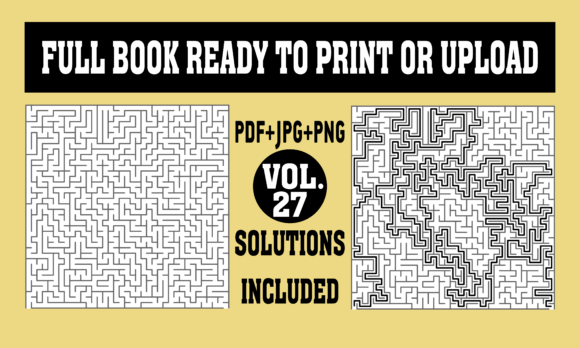
Understanding what KDP Interior Mazes with Solutions 27 offers requires a look at its detailed composition. The product is structured to give the publisher maximum flexibility and control. The primary deliverables include separate PNG files for the mazes and the solutions. PNG format is favored for its lossless compression, ensuring that the intricate lines and details of each maze remain sharp and clear without artifacts. Similarly, separate JPG files are provided. JPG files are often more universally compatible and can be useful in various software environments, offering a balance of quality and manageable file size.
The inclusion of a PDF file ready to upload is the cornerstone of the package. For KDP publishing, the final interior file must be a PDF formatted to the platform's exact specifications. This pre-made PDF saves creators from the technical complexities of page layout, resolution checking, and file formatting. It is engineered for the specified trim size of 8.5" x 11" with the "No Bleed" option selected, meaning the content is safely within the margins of the page, a crucial requirement for many interior activity book layouts. This thoughtful preparation means the user can focus on marketing and sales rather than graphic design logistics.
Key Users and Practical Applications
The utility of such a product extends across a surprisingly diverse audience. Self-publishing authors and small publishing houses looking to quickly launch a niche puzzle book find immense value here. Educators and therapists might incorporate these mazes into custom workbooks or handouts for students and clients, using the provided files to tailor materials without needing design skills. Hobbyists and community group leaders can create personalized activity sheets for events. Even business owners in the printing or gift sector could use these assets to produce unique physical products.
Each maze, complete with its solution, serves a dual purpose. The maze itself provides the challenge and engagement for the end-user—the reader or participant. The solution page is a critical quality assurance and usability feature. It allows the book creator to verify the maze's logic, provides an answer key if desired, and can even be used as a separate teaching tool or bonus content. The separation of files empowers creators to decide how to present the solutions: perhaps in a dedicated section at the back of the book, on a companion website, or as a digital download for purchasers.
Advantages of Using a Pre-Prepared Interior Resource
The foremost advantage is the dramatic reduction in time-to-market. Designing 27 unique, compelling mazes that are visually consistent and logically sound requires considerable effort. By starting with a professionally crafted set, creators bypass months of design work. This aligns perfectly with the fast-paced nature of digital publishing where testing market interest with multiple titles is a common strategy.
Another significant benefit is the assurance of technical compliance. KDP has precise requirements for interior files regarding dimensions, resolution, and color mode. A novice publisher might repeatedly fail uploads due to subtle technical errors. The ready-to-upload PDF in packages like KDP Interior Mazes with Solutions 27 mitigates this risk, as it is built explicitly for the platform's guidelines. This technical reliability builds creator confidence and reduces frustrating setbacks.
From a creative standpoint, having multiple file formats (PNG, JPG, PDF) grants unprecedented adaptability. The PNG and JPG files act as raw assets. A creator might choose to remix them, combining mazes from this set with content from other sources, altering sizes for different book formats, or even using individual mazes in digital apps or online courses. The product becomes a foundational asset library, not just a single book.
Considerations for Implementation and Best Use
While the package is designed for ease, successful implementation involves thoughtful planning. The creator must consider how the mazes fit into their overall book concept. Are they standalone puzzles, or part of a themed adventure? The order and pacing of the 27 mazes within the book layout will impact the reader's experience. Using the separate image files, one can sequence them in a difficulty progression or group them by visual style.
It is also vital to remember that this product provides the interior content only. The publisher remains responsible for the critical external elements: crafting an attractive book cover, writing a compelling description for the KDP listing, setting the price, and handling marketing. The interior mazes are the core product, but they exist within a larger publishing ecosystem that requires attention.
Furthermore, understanding the "No Bleed" specification is important. Bleed refers to artwork that extends beyond the edge of the page, requiring trimming. A "No Bleed" setup means all content is contained within the safe margins. This is perfectly suitable for most puzzle books, as mazes are typically framed within the page. Creators should ensure they do not attempt to forcibly add bleed to these files, as it would require significant redesign and could compromise the clean layout provided.
The Workflow: From Download to Live Product on KDP
The practical workflow for a user is straightforward. After acquisition, the creator reviews the files. They might first examine the PDF to see the complete layout as intended. Then, they could use the PNG or JPG files if any customization is planned—for instance, adding a page number or a small logo to each maze using basic image software. The key step is uploading the PDF to the KDP dashboard during the interior upload process.
During the upload, selecting the correct trim size (8.5" x 11") and confirming the bleed setting ("No Bleed") is essential. KDP will then preview the file. The creator should carefully review this preview to ensure all pages display correctly, that the solutions are placed as desired, and that no unexpected cropping occurs. Once approved, the interior is set. The creator then proceeds to finalize the cover, preview the complete book, and set it for publication. This entire process, when using a pre-formatted resource, can be accomplished in a matter of hours rather than weeks.
This efficiency enables a model of rapid iteration. A publisher could use variations of such maze products to create a series of books, testing different titles, covers, or pricing strategies with minimal additional investment in content creation. The 27 mazes provide a substantial amount of content for a single volume, offering good value to the end-customer and a solid foundation for the publisher's catalog.
Observations on Market Relevance and Content Trends
The demand for puzzle and activity books remains robust, both in digital and print formats. They serve as tools for cognitive exercise, stress relief, and simple entertainment. In educational contexts, mazes develop spatial reasoning, problem-solving skills, and fine motor control in young learners. A professionally designed set like this speaks to that demand by offering quality that might be beyond the immediate capability of an individual educator or hobbyist writer.
The trend towards niche publishing and micro-genres on platforms like KDP means that specialized, ready-made content fills a vital gap. It allows experts in other fields—a teacher, a psychologist, a parenting blogger—to publish authoritative content without becoming experts in graphic design. The product democratizes publishing. It exemplifies a shift in creative tools: from software that requires skill to use, to complete assets that require only vision to implement.
Ultimately, resources such as KDP Interior Mazes with Solutions 27 highlight a broader movement in digital creation. They are not just products; they are enablement tools. They reduce the barrier between having an idea and sharing it with the world in a polished, professional form. For anyone looking to contribute to the vast landscape of puzzles and games, understanding and utilizing such structured content packages can be the first step toward a successful and sustainable publishing venture.